Introduction
Blood pressure is one of the most important indicators of your overall health. It measures the force of blood pushing against the walls of your arteries as your heart pumps blood throughout your body. Maintaining healthy blood pressure is essential because both high blood pressure (hypertension) and low blood pressure (hypotension) can lead to serious health complications.
High blood pressure is often called the “silent killer” because it usually develops without noticeable symptoms, yet it significantly increases the risk of heart disease, stroke, kidney disease, and other life-threatening conditions. According to health experts, millions of people worldwide live with hypertension without realizing it.
The good news is that blood pressure problems can often be prevented or managed through healthy lifestyle habits, regular monitoring, and timely medical care. This article explains everything you need to know about blood pressure, including its causes, symptoms, risk factors, prevention strategies, and treatment options.
What Is Blood Pressure?
Blood pressure is the force exerted by circulating blood against the walls of your arteries.
A blood pressure reading has two numbers:
- Systolic Pressure: The top number measures pressure when the heart contracts.
- Diastolic Pressure: The bottom number measures pressure when the heart relaxes between beats.
Example:
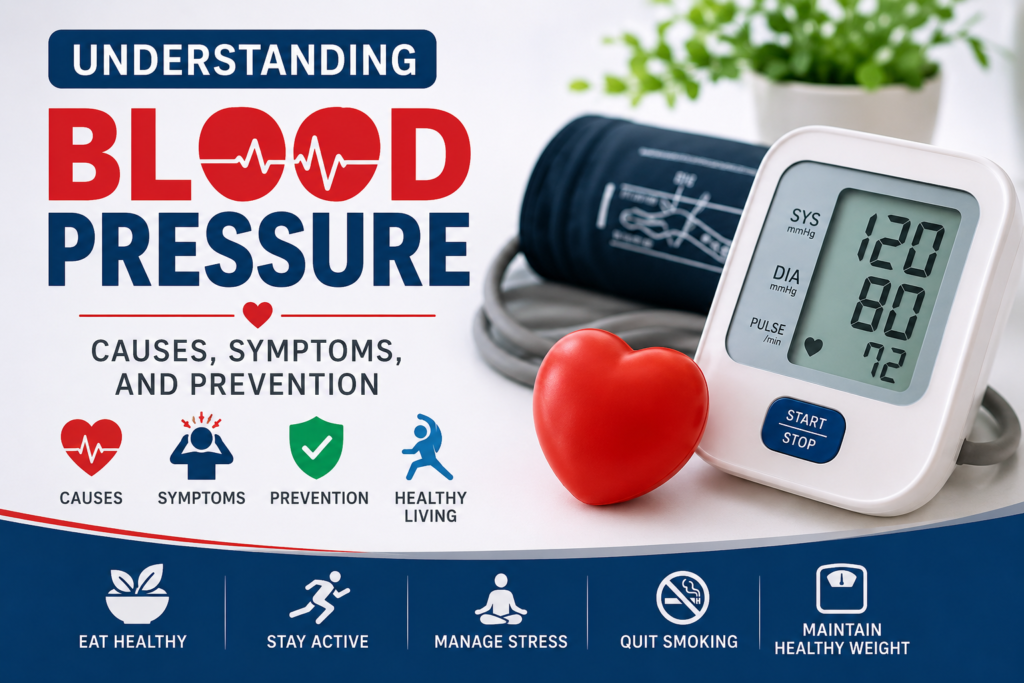
120/80 mmHg
- 120 = Systolic Pressure
- 80 = Diastolic Pressure
Blood Pressure Categories
| Category | Blood Pressure |
|---|---|
| Normal | Less than 120/80 mmHg |
| Elevated | 120–129 / Less than 80 |
| Stage 1 Hypertension | 130–139 or 80–89 |
| Stage 2 Hypertension | 140/90 mmHg or higher |
| Hypertensive Crisis | Above 180/120 mmHg (Medical Emergency) |
Why Blood Pressure Matters
Healthy blood pressure ensures that oxygen and nutrients reach every organ efficiently.
When blood pressure remains too high for a long time, it damages:
- ❤️ Heart
- 🧠 Brain
- 👁 Eyes
- 🩺 Kidneys
- 🦴 Blood vessels
Causes of High Blood Pressure
In many cases, hypertension develops gradually over several years.
1. Unhealthy Diet
Eating foods high in sodium, processed foods, sugary drinks, and unhealthy fats can increase blood pressure.
2. Lack of Physical Activity
A sedentary lifestyle weakens the cardiovascular system and contributes to weight gain.
3. Obesity
Extra body weight forces the heart to work harder, increasing blood pressure.
4. Smoking
Nicotine narrows blood vessels and raises blood pressure immediately after smoking.
5. Excess Alcohol
Heavy alcohol consumption damages blood vessels and increases hypertension risk.
6. Chronic Stress
Long-term stress may contribute to persistently elevated blood pressure, especially when combined with unhealthy coping habits.
7. Family History
People with close relatives who have hypertension may have a higher risk.
8. Age
Blood vessels naturally become less flexible as people age.
9. Kidney Disease
Kidney disorders interfere with fluid balance, increasing blood pressure.
10. Diabetes
Diabetes damages blood vessels, increasing the likelihood of hypertension.
Symptoms of High Blood Pressure
Most people experience no symptoms.
When symptoms occur, they may include:
- Severe headaches
- Dizziness
- Blurred vision
- Chest pain
- Shortness of breath
- Nosebleeds
- Fatigue
- Irregular heartbeat
Seek emergency medical care if blood pressure is extremely high and accompanied by severe chest pain, neurological symptoms, or difficulty breathing.
Causes of Low Blood Pressure
Low blood pressure may result from:
- Dehydration
- Blood loss
- Pregnancy
- Heart problems
- Certain medications
- Severe infections
- Nutritional deficiencies
Symptoms of Low Blood Pressure
- Lightheadedness
- Fainting
- Weakness
- Blurred vision
- Confusion
- Cold, clammy skin
- Nausea
Risk Factors
Several factors increase the risk:
- Age over 40
- Obesity
- Smoking
- High-sodium diet
- Diabetes
- Kidney disease
- High cholesterol
- Physical inactivity
- Chronic stress
- Family history
Complications of Uncontrolled High Blood Pressure
Untreated hypertension can lead to:
❤️ Heart attack
🧠 Stroke
🩺 Heart failure
👁 Vision loss
🧬 Kidney failure
🦴 Peripheral artery disease
🧠 Dementia
How Blood Pressure Is Diagnosed
Healthcare professionals diagnose blood pressure using:
- Digital blood pressure monitors
- Manual blood pressure cuffs
- Home blood pressure monitoring
- Ambulatory blood pressure monitoring (24-hour monitoring)
Regular monitoring helps detect problems early.
Prevention Tips
Eat a Healthy Diet 🥗
Choose:
- Fruits
- Vegetables
- Whole grains
- Beans
- Fish
- Lean proteins
- Low-fat dairy
- Nuts
Reduce:
- Salt
- Fried foods
- Sugary drinks
- Processed foods
Exercise Regularly 🏃
Aim for at least 150 minutes of moderate-intensity exercise each week, such as brisk walking, cycling, swimming, or dancing.
Maintain a Healthy Weight ⚖️
Even modest weight loss can help lower blood pressure in people who are overweight.
Limit Salt Intake 🧂
Keeping sodium intake lower can help reduce blood pressure, particularly in people who are salt-sensitive.
Quit Smoking 🚭
Stopping smoking improves heart and blood vessel health almost immediately.
Limit Alcohol 🍷
If you drink alcohol, do so in moderation.
Manage Stress 🧘
Healthy stress-management techniques include:
- Meditation
- Yoga
- Deep breathing
- Spending time outdoors
- Listening to music
- Quality sleep
Sleep Well 😴
Adults generally benefit from 7–9 hours of sleep each night.
Check Blood Pressure Regularly
Routine screening is especially important if you have risk factors or a family history of hypertension.
Treatment Options
Treatment depends on the cause and severity.
It may include:
- Lifestyle modifications
- Weight management
- Blood pressure medications
- Treatment of underlying medical conditions
- Regular follow-up with a healthcare provider
Never stop prescribed blood pressure medication without consulting your healthcare provider.
Foods That Support Healthy Blood Pressure
🥬 Leafy greens
🍌 Bananas
🥑 Avocados
🐟 Salmon
🥜 Nuts
🫐 Berries
🥣 Oatmeal
🥔 Sweet potatoes
🥦 Broccoli
🫘 Beans
Myths About Blood Pressure
Myth 1: High blood pressure always causes symptoms.
Fact: Most people have no symptoms.
Myth 2: Only older adults get hypertension.
Fact: Young adults and even teenagers can develop high blood pressure.
Myth 3: Medication alone is enough.
Fact: Healthy lifestyle habits remain an essential part of treatment.
Myth 4: Sea salt is healthier than table salt.
Fact: Both contain sodium and should be consumed in moderation.
When to See a Doctor
Consult a healthcare professional if you:
- Have consistently high blood pressure readings
- Experience dizziness or fainting
- Develop chest pain
- Have severe headaches with vision changes
- Experience shortness of breath
- Have a family history of hypertension
Frequently Asked Questions (FAQs)
Can stress cause high blood pressure?
Stress can temporarily increase blood pressure, and chronic stress may contribute indirectly through unhealthy habits such as poor diet, smoking, or excess alcohol use.
Can hypertension be cured?
Some people can return their blood pressure to a healthy range through lifestyle changes, while others require long-term medication. The goal is effective control rather than a guaranteed cure.
How often should I check my blood pressure?
Healthy adults should have it checked periodically during routine healthcare visits. People with high blood pressure or risk factors may need more frequent monitoring as advised by their healthcare provider.
Is walking good for blood pressure?
Yes. Regular brisk walking can help lower blood pressure and improve overall cardiovascular health.
Which foods should I avoid?
Limit processed foods, fast food, salty snacks, sugary beverages, processed meats, and foods high in saturated or trans fats.
Conclusion
Blood pressure plays a vital role in maintaining overall health. Because high blood pressure often develops without obvious symptoms, regular monitoring is one of the best ways to detect it early. By eating a balanced diet, staying physically active, maintaining a healthy weight, managing stress, avoiding tobacco, limiting alcohol, and following medical advice when needed, you can greatly reduce your risk of hypertension and its complications. Small, consistent lifestyle changes today can protect your heart, brain, kidneys, and overall well-being for years to come.