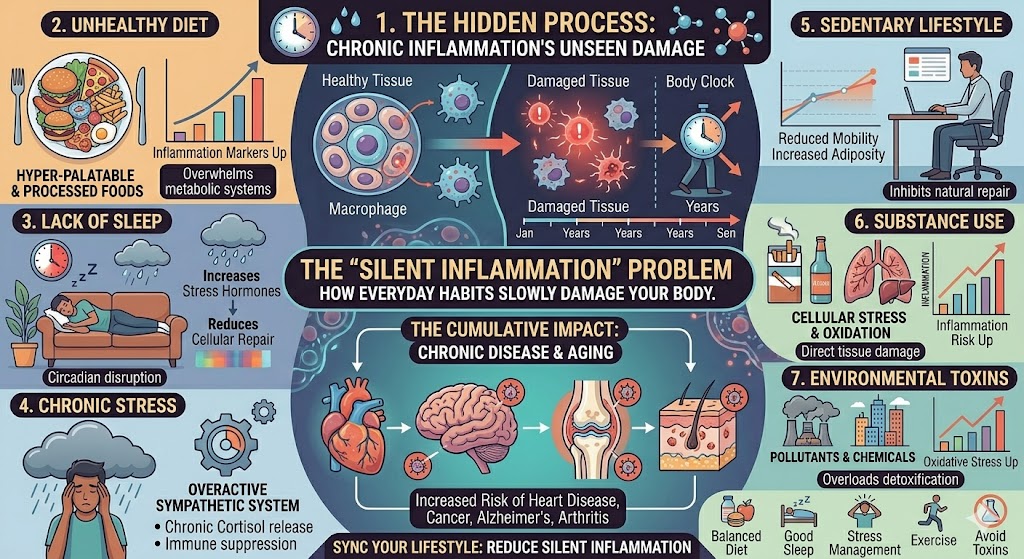

The “Silent Inflammation” Problem: How Everyday Habits Slowly Damage Your Body
Silent inflammation is one of the most overlooked health threats of modern life. Unlike a cut or infection that shows clear redness and pain, this type of inflammation works quietly in the background—gradually affecting your organs, metabolism, brain, and immune system over time. The most concerning part? Many everyday habits we consider “normal” are the very triggers keeping this internal fire alive.
In this blog, we’ll explore what silent inflammation is, how it builds up, the habits that fuel it, and practical ways to reverse it naturally.
What Is Silent Inflammation?
Silent inflammation (also called chronic low-grade inflammation) is a long-term immune response that never fully turns off. Instead of protecting the body and then stopping, your immune system stays slightly activated for months or even years.
This constant activation leads to slow tissue damage and is linked to conditions such as:
- Heart disease
- Type 2 diabetes
- Obesity
- Alzheimer’s disease
- Autoimmune disorders
- Chronic fatigue
Unlike acute inflammation, which is beneficial and temporary, silent inflammation is harmful precisely because it is subtle.


The challenge is that most people don’t feel it happening. Instead, they notice its consequences years later—fatigue, weight gain, brain fog, or chronic illness that seems to “come out of nowhere.”
Why Modern Life Triggers Constant Inflammation
Human bodies are designed for short bursts of stress followed by recovery. However, modern lifestyles often remove recovery entirely.
Several key environmental and behavioral factors contribute:
1. Processed Foods and Sugar Overload
Highly processed foods contain refined sugar, seed oils, and additives that disrupt metabolic balance. Excess sugar spikes insulin and promotes inflammatory responses in blood vessels and tissues.
2. Chronic Stress
Work pressure, financial anxiety, and constant digital stimulation keep cortisol levels elevated. While cortisol is useful in short bursts, chronically high levels weaken immune regulation.
3. Sedentary Lifestyle
Sitting for long hours reduces blood circulation and slows down metabolic processes that help remove inflammatory waste products.
4. Poor Sleep Quality
Sleep is the body’s natural anti-inflammatory reset. Without it, inflammatory markers rise significantly.


Each of these factors alone may not seem dangerous—but combined, they create a constant internal inflammatory state.
The Hidden Signs You Shouldn’t Ignore
Silent inflammation doesn’t announce itself loudly. Instead, it shows up in subtle, often misinterpreted symptoms:
- Persistent fatigue even after rest
- Unexplained weight gain (especially belly fat)
- Brain fog or reduced focus
- Digestive issues like bloating
- Frequent headaches
- Mood swings or irritability
- Slow recovery from illness or exercise
Many people dismiss these symptoms as “normal aging” or stress, but they are often early warning signals of internal imbalance.


Recognizing these signs early is crucial because silent inflammation is reversible—especially in its early stages.
How Silent Inflammation Damages the Body Over Time
When inflammation becomes chronic, it starts affecting multiple systems:
1. Cardiovascular System
Inflammation damages blood vessel walls, making them more prone to plaque buildup. This increases the risk of heart attacks and strokes.
2. Metabolic System
Inflammation interferes with insulin function, increasing the risk of insulin resistance and type 2 diabetes.
3. Brain Function
Neuroinflammation affects neurotransmitters, leading to memory issues, depression, and cognitive decline.
4. Digestive System
The gut lining becomes more permeable, often referred to as “leaky gut,” which allows toxins to enter the bloodstream and worsen inflammation.


Over time, these systems stop functioning optimally, which is why chronic inflammation is associated with many modern diseases.
Everyday Habits That Quietly Make It Worse
Many habits feel harmless but contribute significantly to inflammation:
Eating Late at Night
Late-night eating disrupts circadian rhythm and digestion, increasing metabolic stress.
Skipping Exercise
Even moderate movement helps regulate immune response. A sedentary lifestyle allows inflammation to persist.
Excess Screen Time
Blue light exposure at night reduces melatonin, which has anti-inflammatory properties.
Overuse of Ultra-Processed Foods
These foods lack fiber and antioxidants, both essential for controlling inflammation.
Emotional Suppression
Long-term emotional stress without expression increases inflammatory signaling in the body.


The problem is not one habit—but the accumulation of many small ones over time.
How to Reduce Silent Inflammation Naturally
The good news: your body has a strong ability to heal when given the right conditions.
1. Anti-Inflammatory Diet
Focus on whole foods:
- Leafy greens
- Berries
- Fatty fish (omega-3 rich)
- Nuts and seeds
- Olive oil
- Turmeric and ginger
Avoid or reduce refined sugar, processed snacks, and trans fats.
2. Daily Movement
You don’t need intense workouts. Even:
- 30-minute walks
- Light stretching
- Yoga
can significantly reduce inflammatory markers.
3. Quality Sleep
Aim for 7–9 hours of consistent sleep. Keep a regular sleep schedule and reduce screen exposure before bedtime.
4. Stress Management
Meditation, deep breathing, journaling, or even short breaks during work can reset cortisol levels.
5. Gut Health Support
Fiber-rich foods and fermented foods like yogurt or kimchi help maintain a healthy gut microbiome.


Consistency matters more than perfection. Small improvements in daily habits can gradually lower inflammation levels.
Can Silent Inflammation Be Reversed?
Yes—especially in early stages. The body constantly repairs itself when stressors are reduced. Studies show that lifestyle changes alone can significantly reduce inflammatory markers within weeks to months.
However, reversal requires consistency. Occasional healthy meals or one good night’s sleep won’t offset long-term damage. The key is building a sustainable lifestyle that reduces stress on the immune system.
Final Thoughts
Silent inflammation is not a sudden condition—it’s a slow accumulation of daily choices. The foods you eat, how you sleep, how you manage stress, and how much you move all shape your internal health more than most people realize.
The good news is that awareness itself is powerful. Once you recognize the habits contributing to inflammation, you can begin to reverse the process naturally.
Your body is always trying to heal. The goal is to stop getting in its way.