• General
  • Health & Fitness
  • Stress Management Techniques for Healthcare Professionals

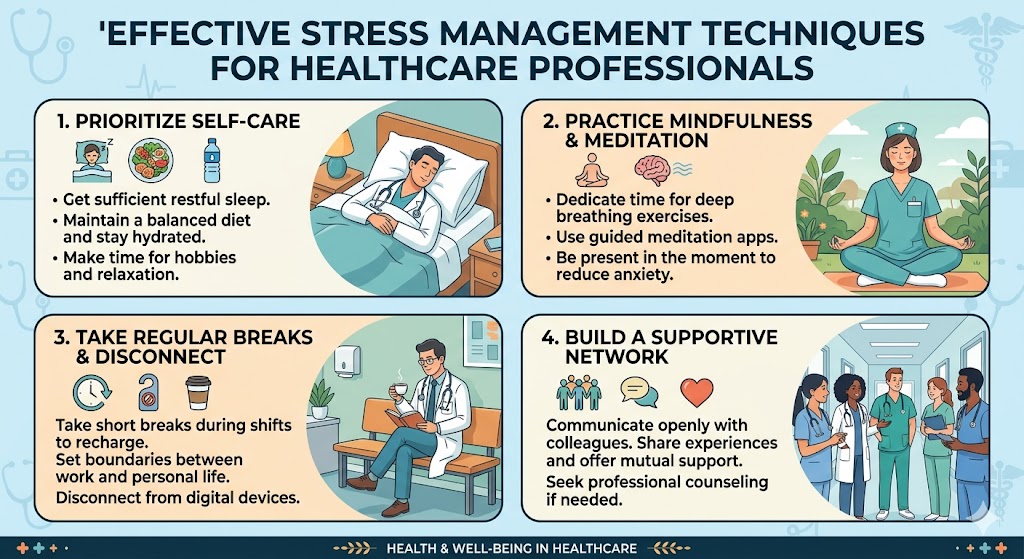
    Healthcare professionals often work in high-pressure environments where long hours, emotional strain, and critical decision-making are part of daily life. Managing stress effectively is essential not only for personal well-being but also for delivering safe, high-quality patient care.


    1. Mindfulness and Breathing Techniques

    Mindfulness helps healthcare workers stay present, reduce anxiety, and regain focus during intense shifts. Simple breathing exercises can quickly calm the nervous system, even in a busy hospital setting.

    https://images.openai.com/static-rsc-4/z9PFjFHC_1nGfGnhl-Nf93-bxvmsV7YTdFptjv8vodUOqDu04pX2toCsoZtOsdTJiklKNqpOGZTHUrAZs8DEFsSnU6R-Rxy4fzEQxQCa_vsqzG-1BqT9cCsBkVA96OgxAsmKyHCO1bDmOC0JgsHVfEc4ZrT5SVNLW7xoMZMUD4_I29kG0MnQBXgIqbRJLWs6?purpose=fullsize
    https://images.openai.com/static-rsc-4/na5gb2S2UbPRcCmQZg7vDGgfngncDEVQaE3ntpDKT4mNIECKl1uJL9Rfo4tbCtd6LkKAS-uLmNjvLZddnZv80CaWJlzBgJ6973xyoJE5K8tC2voGjl4kbHFiqsPWeQ7oitmohfsP6K8kuyyOXCgSBajHhnxD764BwwRffpCeWTzzvHTbeLdgEAmGUxC0x0Ne?purpose=fullsize
    https://images.openai.com/static-rsc-4/CfRFNiaLCsjWCZNQeDokAaK6yS0fR1yjXSJuj25Z9Vys1YsmBwzlTLQMM_lafCxxE1vzduWA5_AB8etszLM-lHkHt_bxQ12vhOq9hBbxHHDvgB44MkPRAUPnoLb231qQZc14iOgZ8Ml2sZAQxl5ehtgrPxwKVna5_K6pEarx_mdK-fC3pyJPOoUM0Jo6p4My?purpose=fullsize

    8

    Practices like box breathing (inhale–hold–exhale–hold) or a 5-minute guided meditation during breaks can significantly reduce stress levels and improve emotional balance.


    2. Time Management and Workload Organization

    One of the biggest stress triggers in healthcare is overwhelming workload. Effective time management helps reduce chaos and improves efficiency.

    https://images.openai.com/static-rsc-4/-_nMPfYROC0pQfxDcQzqwAli4ufdbprpqOC2P9XjZZcSokjonLk5OnfIwGPO2zLkcwoq7z5XiQpBvNa7VxqbFc28YPZvn8tgdR6XmUPXn4U6VGgedQnLI0zAuTD8T2B80Qrje_54l2ZwYSDzc3XKZWwY7o-R8CHOicHOCFKY-MZO3KQjrR8TY08FrTf4LNkL?purpose=fullsize
    https://images.openai.com/static-rsc-4/yFXIk-QhKebw9s4Ev23zKoBVBYf8QLnyUgFYXpfxpHDPsPjpAABVwbQjuHdbJCD9DKfFWyCsL-MTF3uDLbf6jSvKN-PeMa2GZygSUqe1BHcXFtCPJD2PbqqlQjO-LL9vYL6cYlYSI6YVEl6LjeUPH9mR5HmIxS-VqGatumjsr0YvdGRW92jcnIVfG2DnjEky?purpose=fullsize
    https://images.openai.com/static-rsc-4/c4PvIqzHonkFNQ0ZGLUI3pJ74c_2gRnPnpnnArq04DFS6G8_NqJnr8sWntxOrUkqz2-LstaZo1T49nNi1OdM9T6CXAJL-GJpQZYRxUJls_gM3DbvsbqG7YV4dY6LianSaQdbXLG8I2Tj9nKQMJyKtmszP2X_amfbiwGbDCAIFJfHq1XcrQBIoij8Z6ygvf_X?purpose=fullsize

    5

    Prioritizing tasks, using digital scheduling tools, and clear communication during shift handovers can reduce confusion and prevent burnout caused by disorganization.


    3. Physical Activity and Healthy Lifestyle

    Regular movement helps release stress hormones and improves overall mental health. Even small activities during breaks can make a difference.

    https://images.openai.com/static-rsc-4/pdrVv93f1Vey8bViA-kNbDoT8viMdKfo3bpCmewA94EaGzCL7xaFfSS_OzxlZuH8MoSxxibenGhILtL6DEgbw_GTT4-93KtXb4Hw93Z43iTv9ncE-xNaBC_WLQjfYY01TMKItoS_EYUy9P7Th6nbJG4vvlLGWiyYuMV7A7ZSmlaBvX0s1RQ6Y3bmWMhE5bg_?purpose=fullsize
    https://images.openai.com/static-rsc-4/Xw0LRjfxsh32NQ2UfiBhCona0MtUaUmU0O26or8tN-Iidr2T-YdK7s_ESJ8nVTP-e7S7fuJM5lGh-tKnLnyK2A4EvHqGP7W3DbChTV1bHPzwtF7RPAWQPv-Bgd_VuITeRh5Fk6pKkRbzPlhuhrymA0bkdh7t_NUnZlDfL6reFDupT4hfOWP5ie3wLyVsBUzq?purpose=fullsize
    https://images.openai.com/static-rsc-4/mFA0tO9mOgYcg5mVKqmCevkCPSEzvBsRBniFROzfvzVdBAsO80GWNSxtcUTppv7WbEfcvFJnvJnSYW5ocyjltntiZILwWKftbhjSiKt4rC8tihPGrhcnyuExJFWnFGkwUpfMWnFn8Va5_J2E4PFnIJ9Jo50bW1mx2XVFSwHigXu7Y9L8U5wHtWzPnD9jbiXQ?purpose=fullsize

    6

    Simple habits like stretching between shifts, staying hydrated, and maintaining balanced meals can greatly improve energy levels and resilience.


    4. Emotional Support and Team Communication

    Healthcare environments can be emotionally demanding. Having a strong support system is crucial for managing stress effectively.

    https://images.openai.com/static-rsc-4/yOapJSSZalaB7Or7NNG_vV3b-ALHjUqMn33auGcjarF6uGr3hItsLXphbPDCW9aSOoMelIWvKcM_G-c-xtqIk-7hqb9DofHAJzb_qcK0GK1Acg54PrTNXhqk_6ylsU228auQW08XZN1mlkveVHeynuvclXsE3Y950IE9NiJ1f_41JXaJhYZuZGEsZTbB_xJi?purpose=fullsize
    https://images.openai.com/static-rsc-4/P_pjlJl72fXe5jdDCFzqFUn973gnm1Q76oGDrmac--1CE38WUSep-nqS7S3BAsoHTay7HCvllTfhc_i4EuLO_ljqEMPxsPFVtYb5BxojdrgfjDglydSaPJJTnf8OR2GNOTPLLV1XA62XZRafLIRx6mpwUeIdoaJmfdv6x7mGaou_eGpeAQBYWUn1ojcRDASC?purpose=fullsize
    https://images.openai.com/static-rsc-4/1UCpYr0zUSftHC2lctmNt6LC2GOVE6PRVq5Qz5JTeuEXZbwNF0iMzvx9Cl2yGlhzDz6xh2lYre3DLhhqq3kqbXFJEsRVS8ETJnZ2QCmTmftVYCdcE1RUmjiraC2tUI3wIkBVQvpizcqBk_BZZjcTMZWRMMpYMYhtOFVO6sZwiD6Xmo9JfFDIf4kjxSZ9l6CN?purpose=fullsize

    6

    Regular team debriefings, peer support groups, and access to counseling services help healthcare professionals process difficult experiences and prevent emotional exhaustion.


    5. Preventing Burnout Through Boundaries and Rest

    Burnout is common in healthcare when rest and boundaries are neglected. Learning to disconnect after shifts is essential for long-term sustainability.

    https://images.openai.com/static-rsc-4/Itd_EGGOUVk9Bbr0pqRGZnWHRTjYGwLgCzIIfVTzXdfSbniadoGmaEpVhSeDL0zvoz8tpmWQ4FA_mJgA3VOQWcCT-gWojJyjguX3Ow1BvRGUaAI-vfM18uK0Z9mxuvNDCTzSqwGvY0vGN6ujDOnwUTVVUDlnr1Uj5I8dZg0Bam1N91mZsHUZyvMViZAg-Wzd?purpose=fullsize
    https://images.openai.com/static-rsc-4/oJu9KrK47gP4ly8dYyc9YbLKJvyjU4vQQU1jXAOrpzD2ubmlDvH_K3Raz9wB-2wV0733nIq4xcK-TlgzzcbavuUMzu7HZnrdy66aAz7K455WhYfufFRvRpFTQ70D5AAsVRW0zajTO10buqC9Td3VJu0VdvRhERgISwGUoJd69JSBYDpj2LXJoJDtTljJjg6D?purpose=fullsize
    https://images.openai.com/static-rsc-4/ydFJ2F11Eznm78fwN0OQYnLy0otVFlXghNPgUGkGVa4TAqydr91QVXqWz7vhuT9DkdGegGhhIM2iF2A8PQ65qHakWoZ43s4hugKGed4GlTaeXUIyxM8BPfY7OKoLlq4QF0HHv2E3vp8oMNDSCNN-zzFM5U-cGepCbeLo4mIyTl_ioL9FSix7qKDTQUVC_66_?purpose=fullsize

    7

    Setting boundaries, taking regular leave, and prioritizing sleep are not luxuries—they are necessary for maintaining performance and mental health.


    Conclusion

    Stress is an unavoidable part of healthcare work, but it can be managed effectively with the right strategies. Mindfulness, organization, physical health, emotional support, and proper rest all work together to build resilience. When healthcare professionals take care of themselves, they are better equipped to take care of others.


    2 mins