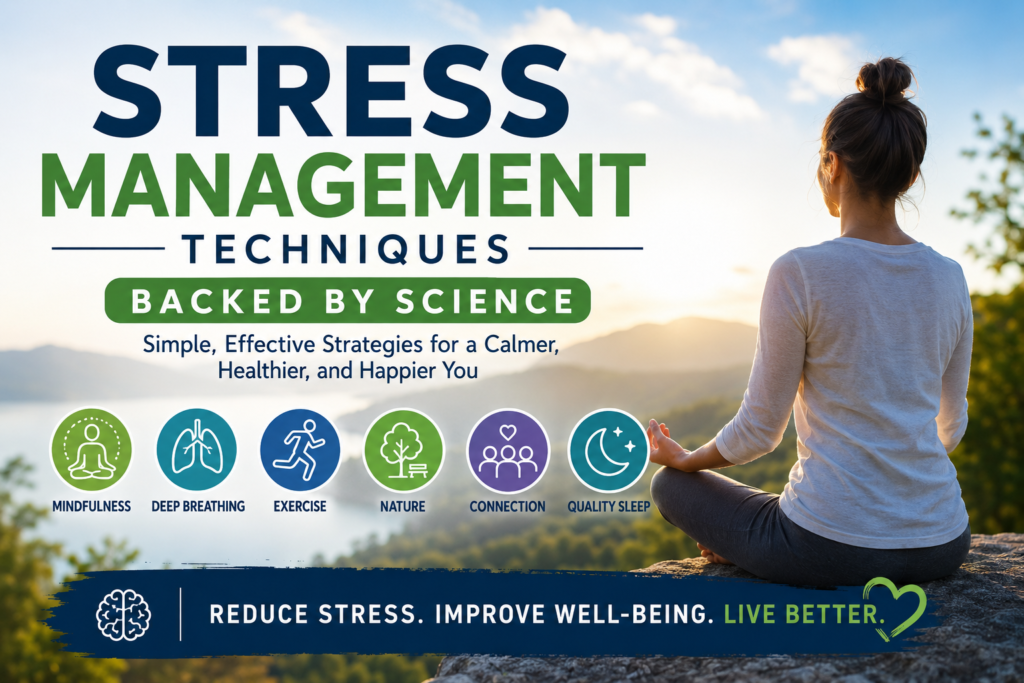
Stress is an unavoidable part of life, but how we respond to it determines its impact on our physical and mental well-being. While short-term stress can help us stay alert and motivated, chronic stress can increase the risk of anxiety, depression, heart disease, weakened immunity, and sleep disorders.
The good news? Science has identified several effective techniques that help reduce stress, improve resilience, and promote overall health. This guide explores evidence-based stress management strategies that you can easily incorporate into your daily life.
🧘 What Is Stress?


Stress is the body’s natural response to challenges or demands. When faced with a stressful situation, the brain releases hormones like cortisol and adrenaline, triggering the “fight-or-flight” response.
Common Signs of Stress
- 😟 Constant worrying
- 😴 Difficulty sleeping
- 💓 Rapid heartbeat
- 😠 Irritability
- 🤕 Frequent headaches
- 🍔 Emotional eating or loss of appetite
- 😫 Fatigue
- 🤒 Frequent illnesses
If these symptoms persist for weeks, it may indicate chronic stress.
Why Managing Stress Matters
Long-term stress affects nearly every system in the body, including:
- ❤️ Cardiovascular health
- 🧠 Brain function
- 🦠 Immune system
- 😴 Sleep quality
- 🍽️ Digestion
- ⚖️ Hormonal balance
Managing stress isn’t simply about feeling better—it helps protect long-term health.
1. Practice Mindfulness Meditation 🧘♀️
One of the most researched stress-reduction techniques is mindfulness meditation.
Mindfulness teaches you to focus on the present moment without judgment.
Scientific Benefits
Research has shown mindfulness can:
- Lower cortisol levels
- Reduce anxiety
- Improve concentration
- Improve emotional regulation
- Reduce symptoms of depression
Try This
- Sit comfortably.
- Close your eyes.
- Focus on your breathing.
- When your mind wanders, gently return your attention to your breath.
Start with just 5–10 minutes daily.
2. Deep Breathing Exercises 🌬️
Deep breathing activates the parasympathetic nervous system, helping your body relax.
Box Breathing Technique
- Inhale for 4 seconds
- Hold for 4 seconds
- Exhale for 4 seconds
- Hold again for 4 seconds
Repeat for 5 minutes.
Benefits
- Lowers heart rate
- Reduces blood pressure
- Calms the nervous system
- Improves focus
3. Exercise Regularly 🏃♀️


Exercise is one of the most powerful natural stress relievers.
Physical activity releases endorphins, often called “feel-good hormones.”
Best Activities
- Walking
- Running
- Yoga
- Swimming
- Cycling
- Dancing
- Strength training
Recommended Amount
Aim for:
- 150 minutes of moderate exercise weekly
- Plus 2 days of strength training
Even a 20-minute walk can improve mood.
4. Prioritize Quality Sleep 😴
Poor sleep increases stress, while stress also disrupts sleep.
Breaking this cycle is essential.
Sleep Tips
- Maintain a regular bedtime
- Avoid caffeine late in the day
- Keep your bedroom cool and dark
- Limit screen time before bed
- Develop a relaxing nighttime routine
Adults generally need 7–9 hours of sleep each night.
5. Spend Time in Nature 🌳
Research shows spending time outdoors lowers cortisol and improves mood.
Nature Activities
- Park walks
- Hiking
- Gardening
- Beach visits
- Forest trails
Even 20–30 minutes outside can have noticeable benefits.
6. Connect With Loved Ones ❤️
Social support is one of the strongest protective factors against stress.
Talking with trusted people helps reduce emotional burden.
Ways to connect:
- Family dinners
- Coffee with friends
- Phone calls
- Community activities
- Support groups
Human connection boosts emotional resilience.
7. Practice Gratitude 🙏
Gratitude shifts focus away from stress toward positive experiences.
Gratitude Journal
Every evening write:
- Three things you’re grateful for
- One positive thing that happened today
- One achievement, no matter how small
This simple habit can improve overall well-being over time.
8. Reduce Information Overload 📱
Constant news updates and social media notifications can increase stress.
Healthy Digital Habits
- Schedule screen-free time
- Turn off unnecessary notifications
- Avoid doomscrolling
- Limit news consumption
- Take regular breaks from devices
Digital boundaries can help your mind recover.
9. Eat a Balanced Diet 🥗


Nutrition plays an important role in stress management.
Foods That Support Mental Health
- Leafy greens
- Whole grains
- Fatty fish
- Nuts
- Seeds
- Yogurt
- Berries
- Dark chocolate (in moderation)
Stay Hydrated
Even mild dehydration may affect mood and concentration.
10. Laugh More 😂
Laughter triggers the release of endorphins and reduces muscle tension.
Ideas:
- Watch comedy shows
- Spend time with funny friends
- Play games
- Share jokes
Laughter is a simple yet effective stress reliever.
11. Listen to Relaxing Music 🎵
Music can influence heart rate, breathing, and mood.
Best choices include:
- Classical music
- Nature sounds
- Instrumental music
- Soft acoustic playlists
- Meditation music
Listening for 20–30 minutes may help reduce stress levels.
12. Learn Time Management ⏰
Feeling overwhelmed often comes from trying to do too much.
Helpful Strategies
- Prioritize important tasks
- Break large projects into smaller steps
- Use calendars or planners
- Set realistic goals
- Learn to say “no” when necessary
Better organization can reduce daily stress.
13. Progressive Muscle Relaxation 💆
This technique involves tightening and relaxing muscle groups one at a time.
Start from your feet and move upward:
- Tighten muscles for 5 seconds
- Relax for 10–15 seconds
This helps release physical tension associated with stress.
14. Practice Self-Compassion 💙
Many people respond to stress with harsh self-criticism.
Instead:
- Accept mistakes
- Speak kindly to yourself
- Focus on progress rather than perfection
- Recognize that everyone experiences setbacks
Self-compassion is linked with lower stress and greater emotional resilience.
15. Seek Professional Help When Needed 👩⚕️
If stress becomes overwhelming or starts interfering with work, relationships, or daily life, speaking with a qualified mental health professional can be very helpful.
Therapies such as cognitive behavioral therapy (CBT), mindfulness-based approaches, and stress management counseling have strong scientific support for reducing chronic stress and improving coping skills.
A Simple Daily Stress-Reduction Routine 🌞
You don’t need hours each day to manage stress. Here’s a practical routine:
| Time | Habit |
|---|---|
| 🌅 Morning | 5 minutes of deep breathing |
| 🚶 Midday | 20-minute walk |
| 💧 Throughout the day | Stay hydrated |
| 🍽️ Meals | Eat balanced, nutritious foods |
| 📱 Evening | Limit screen time |
| 🙏 Before bed | Write three gratitude notes |
| 😴 Night | Aim for 7–9 hours of sleep |
Final Thoughts
Stress is a normal part of life, but it doesn’t have to control your health. Scientific research consistently shows that small, sustainable habits—such as mindfulness, regular exercise, quality sleep, healthy nutrition, social connection, and time in nature—can significantly reduce stress and improve resilience over time.
The key is consistency rather than perfection. Start with one or two techniques that fit your lifestyle, practice them regularly, and gradually build a routine that supports both your mental and physical well-being.